Small Business Bookkeeping Checklist: 12 Tasks for 2026
A small business bookkeeping checklist is the simplest way to stop dreading tax season and start actually knowing what your business earns. Instead of one giant year-end scramble, you break the work into small, repeatable tasks — some daily, some weekly, some monthly, and a few once a year. Do them on schedule and your books stay clean, accurate, and ready for anyone who asks.
This guide gives you the exact tasks in the order that matters, plus the tools that make each one faster. Whether you sell handmade goods, run a service van, or freelance from a laptop, the routine below scales to you.
Quick answer: A small business bookkeeping checklist is a recurring routine of tasks — record income and expenses daily, reconcile accounts and chase invoices weekly, review reports and file sales tax monthly, and prep taxes yearly. Following it keeps your records accurate, your cash flow visible, and your tax filing painless.
What is a small business bookkeeping checklist?
A small business bookkeeping checklist is a written list of the money-tracking tasks you repeat on a set cadence. It turns bookkeeping from a vague chore into a series of five-minute habits.
The point isn’t to become an accountant. It’s to make sure every dollar in and out gets recorded, categorized, and backed up with a receipt — so your numbers are trustworthy when you price a job, apply for a loan, or file taxes.
Good bookkeeping answers three questions at any moment:
- How much money did I actually make this month?
- Who owes me, and who do I owe?
- Do I have enough cash to cover what’s coming?
The small business bookkeeping checklist by frequency
The fastest way to stay on top of your books is to sort tasks by how often they need doing. Here’s the full routine at a glance, then the details for each block.
| Frequency | Core tasks | Time needed |
|---|---|---|
| Daily | Log income, capture receipts, check bank balance | 5 min |
| Weekly | Categorize transactions, send invoices, chase overdue ones | 30 min |
| Monthly | Reconcile accounts, review P&L, file sales tax, back up records | 1–2 hrs |
| Quarterly | Pay estimated taxes, review pricing and margins | 1–2 hrs |
| Yearly | Close the books, gather 1099s, prep for your accountant | Half a day |
Daily tasks (about 5 minutes)
Daily bookkeeping is about capture, not analysis. The goal is to make sure nothing slips through before you forget it.
- Record every sale or payment received. Log the amount, date, and customer while it’s fresh.
- Snap and save receipts. Photograph paper receipts immediately — the IRS accepts digital copies, and a shoebox of faded thermal paper helps no one.
- Glance at your bank balance. Ten seconds tells you if a payment bounced or a charge looks wrong.
That’s it. Three habits that take longer to read about than to do.
Weekly tasks (about 30 minutes)
Weekly work is where raw data becomes organized records. Block the same 30 minutes each week so it becomes automatic.
- Categorize every transaction into the right buckets (supplies, software, mileage, etc.). If you’re unsure which buckets to use, our guide to bookkeeping categories for small business lays out the 15 that matter most.
- Send invoices the day work is done. The faster you invoice, the faster you’re paid.
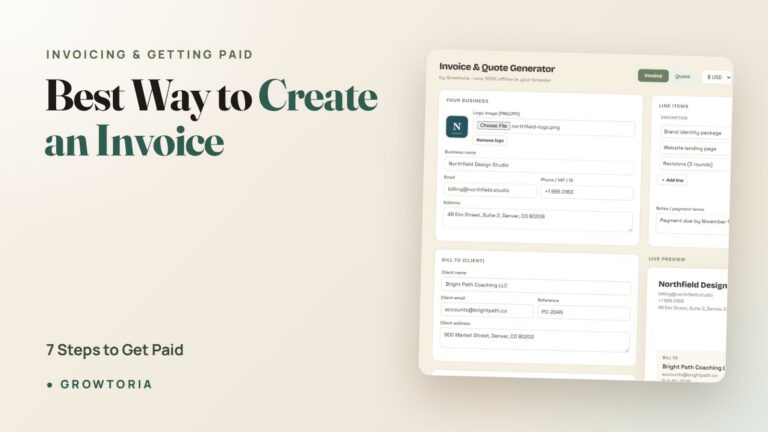
- Chase overdue invoices. A polite nudge at day 7 works — steal one of these late payment reminder email templates so you’re not rewriting it every time.
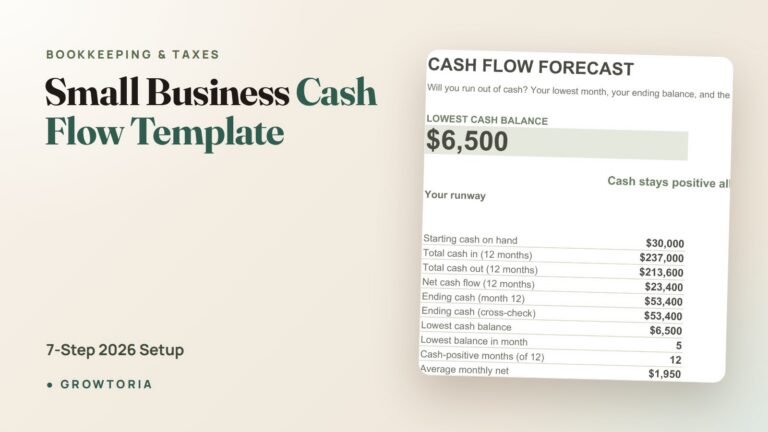
- Set aside a slice for taxes. Move roughly 25–30% of profit into a separate account so quarterly taxes never surprise you.
Monthly tasks (1–2 hours)
Monthly is when you reconcile and read the story your numbers are telling. This is the most important block on the whole checklist.
- Reconcile every account. Match your books against your bank and card statements, line by line, until they agree to the penny. Unexplained gaps are how errors and fraud hide.
- Review your profit and loss statement. Which categories crept up? Did revenue actually grow? A monthly profit and loss statement turns raw entries into a decision-making tool.
- File and remit sales tax if you collect it. Due dates vary by state — check yours and calculate what you owe with a free sales tax calculator by state.
- Check margins. Compare your numbers against the average profit margin for small business to see if your pricing holds up.
- Back up your records. Cloud plus one local copy. Non-negotiable.
Quarterly and yearly tasks
Quarterly and yearly tasks keep you legal and ready for your accountant — the stuff that gets expensive when ignored.
- Quarterly: Pay estimated taxes (if you’re self-employed, the U.S. system is pay-as-you-go), re-check your pricing, and clean up any misfiled transactions.
- Yearly: Close the books for the year, collect W-9s and issue 1099s to contractors you paid $600 or more, tally deductions, and hand a tidy file to your accountant.
Before year-end, run through our small business tax deductions checklist so you don’t leave legitimate write-offs on the table.
How long should you keep bookkeeping records?
Keep most records for at least three years, and some for longer. The IRS bases the period on what the record supports, not the calendar.
As a rule of thumb: keep income and expense records, receipts, and returns for three years; keep employment tax records for four; and keep anything tied to property or major assets until the period of limitations runs out for the year you dispose of them. For the official breakdown, see the IRS recordkeeping guidance — it’s the authority worth bookmarking. When in doubt, keep it. Digital copies count, and storage is cheap.
The tools that make this checklist painless
You don’t need enterprise software to run a clean set of books. You need one place to log income and expenses, and a habit of using it.
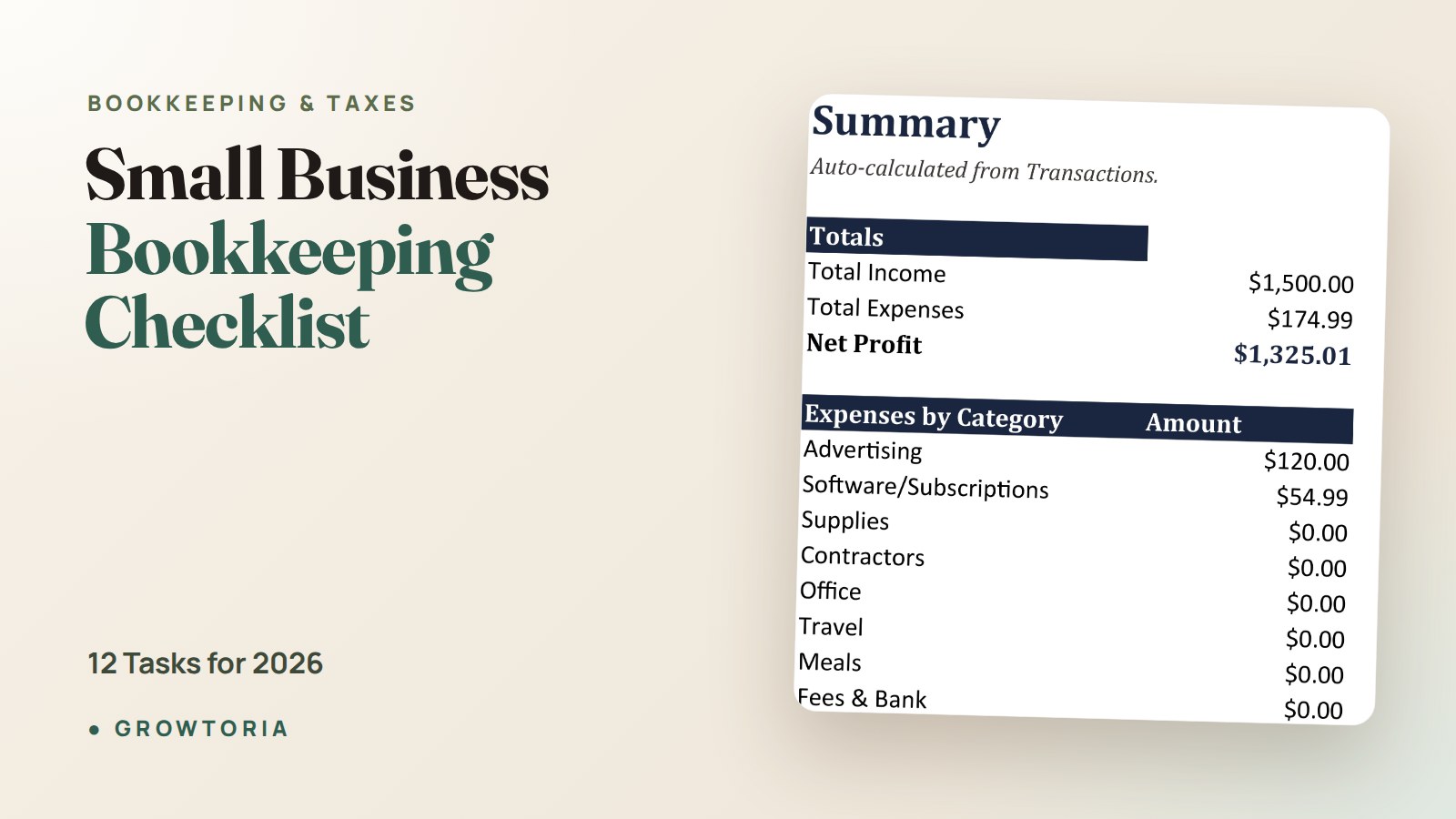
A spreadsheet is often the sweet spot for solo operators and small teams: it’s cheap, offline, and yours forever. Our Small Business Expense Tracker logs income and expenses and instantly shows profit and totals — it’s the done-for-you shortcut for everything in the weekly and monthly blocks above. Prefer a full offline system with invoicing, quotes, and VAT built in? The Growtoria Business Suite runs the whole back office from a single file with no subscription. You can also grab our tools on our Etsy shop if that’s where you prefer to buy.
Whatever you choose, the tool matters less than the routine. A perfect app you never open loses to a plain spreadsheet you update every Friday. If you want a rundown of options that work without a monthly bill, see our list of small business software that works 100% offline.
Common bookkeeping mistakes to avoid
Most bookkeeping pain comes from a handful of avoidable habits. Steer clear of these and you’re ahead of the majority of small businesses.
- Mixing personal and business money. Open a dedicated business account on day one. Untangling one shared account at tax time is misery.
- Letting receipts pile up. Capture them same-day or you’ll never match them to transactions.
- Skipping reconciliation. Unreconciled books are just guesses with decimal points.
- Forgetting to set aside tax money. Spending money you owe the government is the fastest way to a cash crisis.
- Waiting until year-end. Twelve months of catch-up is a nightmare; twelve minutes a week is nothing.
Frequently asked questions
How often should a small business do bookkeeping?
Do a little every day, more each week, and a deeper review monthly. Daily capture (income and receipts) takes five minutes; weekly categorizing and invoicing takes about 30; monthly reconciliation and reporting takes an hour or two. This cadence keeps your books accurate without ever becoming overwhelming.
Can I do my own small business bookkeeping?
Yes — most solo owners and small teams handle their own bookkeeping with a spreadsheet or simple app. Follow a consistent small business bookkeeping checklist, keep business and personal money separate, and reconcile monthly. Many owners bring in an accountant only at tax time to file and check for missed deductions.
What’s the difference between bookkeeping and accounting?
Bookkeeping is recording and organizing daily transactions — the who, what, and how much. Accounting is interpreting that data: preparing statements, filing taxes, and advising on strategy. Bookkeeping is the ongoing habit; accounting is the analysis built on top of it. Clean books make accounting cheaper and faster.
What records do I need for small business bookkeeping?
Keep records of all income (invoices, sales receipts, deposits), all expenses (receipts, bills, statements), bank and credit card statements, mileage logs, and tax filings. Store them digitally, backed up in two places, and hold most for at least three years per IRS guidance.
How do I start bookkeeping if I’m behind?
Start with the current month and get it perfectly clean, then work backward. Gather bank and card statements, list every transaction, categorize it, and reconcile month by month. A simple tracker like our free tools or the expense tracker above makes catch-up far less painful.
Your next step
Bookkeeping stops being scary the moment it becomes a routine. Print this small business bookkeeping checklist, block the daily and weekly slots in your calendar, and pick one tool to log everything in. Do that, and next tax season will be boring — which is exactly what you want.
Ready to make it effortless? Set up the Small Business Expense Tracker today, or browse the full range on our Etsy shop. Your future, calmer self will thank you.