Best Way to Quote a Job: 7 Steps to Win More Work
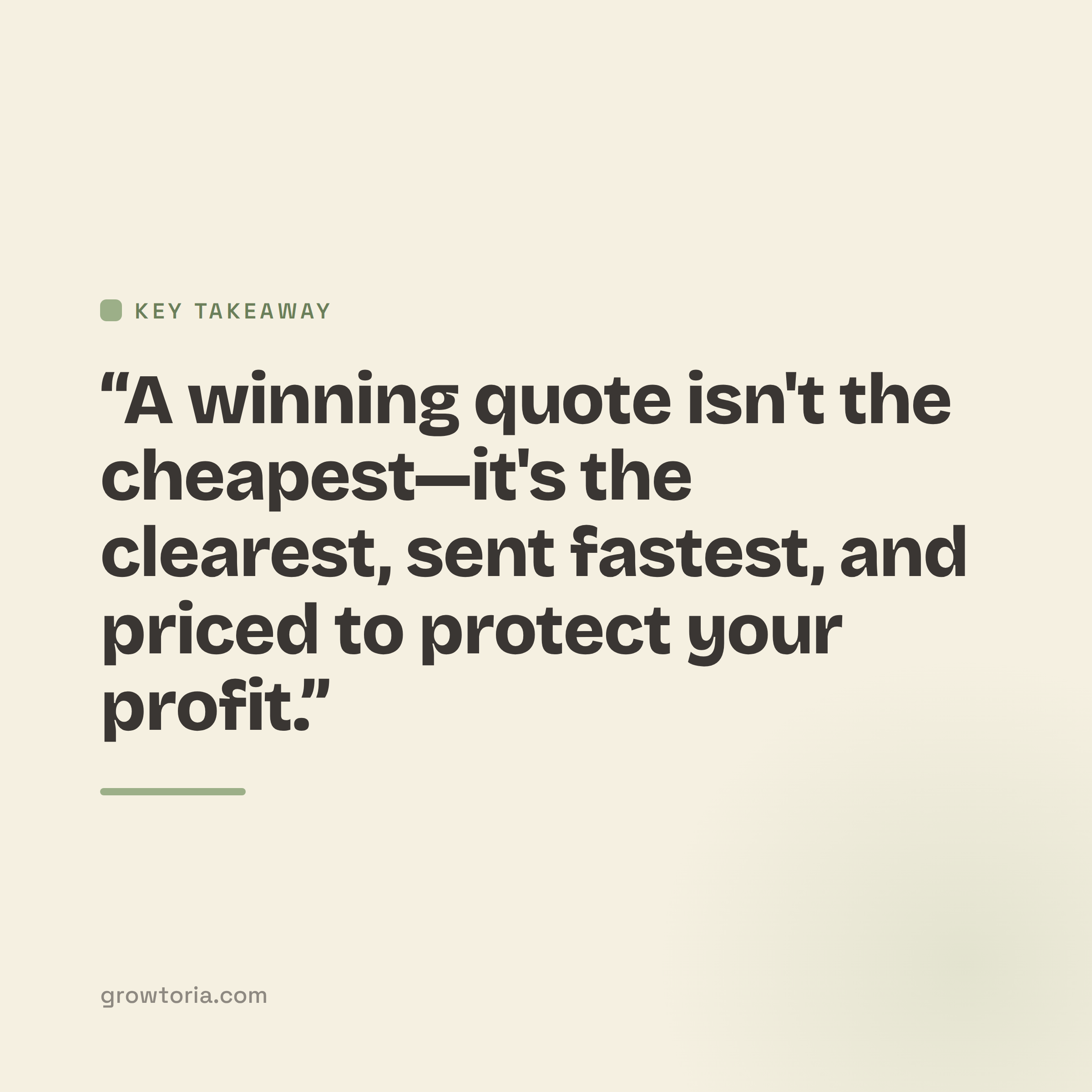
The best way to quote a job is to send a clear, itemized quote that covers every cost, protects your profit margin, and reaches the customer within 24 hours of the conversation. Speed and clarity win more work than a low price—because confused or slow-to-respond tradespeople lose the job before the numbers even matter.
If you’ve ever guessed a number on the spot, watched a “yes” turn into a ghost, or realized halfway through a job you’d priced it too low, this guide is for you. Below are seven hands-on steps you can apply to your very next quote, whether you’re a cleaner, painter, electrician, caterer, or freelancer.
Quick answer: The best way to quote a job is to (1) understand the scope on site, (2) list every line item, (3) price each for profit—not just to beat a rival, (4) add a clear total and payment terms, (5) set an expiry date, (6) send it within 24 hours, and (7) follow up once. Clear beats cheap.
What is the best way to quote a job?
The best way to quote a job is to turn a vague request into a written, itemized document the customer can say “yes” to with confidence. A good quote removes doubt: it shows exactly what they get, what it costs, and what happens next.
Most jobs are lost for one of three reasons—the quote was too slow, too confusing, or too obviously guessed. Fix those three things and your win rate climbs without dropping your price. Before you quote, it helps to know how to cost a job so your number starts from real figures, not a gut feeling.
Quote vs estimate vs bid: what’s the difference?
A quote is a fixed price you commit to. An estimate is your best educated guess that can change. A bid is a competitive offer, usually for larger or tendered projects. Using the wrong word can cost you money or trust.
| Type | Price is… | Best for | Risk to you |
|---|---|---|---|
| Quote | Fixed and binding | Well-defined jobs (a specific clean, a fence, a logo) | You eat any overruns |
| Estimate | Approximate, can change | Unknowns (old wiring, hidden damp, unclear scope) | Customer may dispute the final bill |
| Bid | Competitive offer | Tenders, large contracts, multiple suppliers | Race-to-the-bottom pricing |
Rule of thumb: if you can see the whole job, quote it. If there are real unknowns, send an estimate and say so in writing. For more on the wording and when each applies, Investopedia’s definition of a quote is a clear reference.
The 7 steps to quote a job that wins
Follow these seven steps in order. They work for a one-person cleaning round or a five-van contracting firm.
1. Nail the scope before you touch a number
Walk the site, ask questions, and write down exactly what’s included—and what isn’t. Measure, photograph, and note access issues, parking, or anything that eats time. Ninety percent of underpriced jobs come from a scope you assumed instead of confirmed.
2. List every line item
Break the job into materials, labour, travel, disposal, and any sub-trades. A customer who sees the parts trusts the total. Itemizing also protects you: when they ask to “trim the price,” you remove a line instead of discounting your skill.
3. Price each line for profit—not to beat a rival
Add up your real costs, then apply a margin that keeps you in business. Don’t reverse-engineer a number to undercut a competitor you haven’t seen. If you’re unsure of your markup, run it through a free small business profit margin calculator first.
4. Add a clear total, payment terms, and a deposit
State the grand total once, in bold. Then spell out terms: deposit required, balance due on completion, and accepted payment methods. For bigger jobs, a deposit is standard—see how a deposit invoice protects your cash flow before you buy materials.
5. Set an expiry date
Quotes should expire—14 to 30 days is normal. It protects you from rising material costs and gently nudges the customer to decide. “This quote is valid for 21 days” is one line that does a lot of work.
6. Send it within 24 hours
Speed is the single biggest lever on your win rate. The first clear, professional quote a customer receives usually sets the anchor. If you’re still handwriting quotes in the van, you’re losing to whoever emailed a tidy PDF that evening.
7. Follow up once—politely
A short, friendly message three to five days later recovers a surprising number of “I forgot” jobs. One follow-up is helpful; five is nagging. Keep it simple: “Hi, just checking whether you had any questions on the quote I sent.”
How do you price a job so you don’t lose money?
Price from your costs up, never from a competitor down. Total your materials and direct costs, add your labour at a real hourly or day rate, then apply a margin on top—not just a markup on materials.
A frequent mistake is forgetting overheads: insurance, fuel, tools, admin time, and the quotes you write that never convert. Build a slice of those into every priced job. If you quote painting or decorating work, our step-by-step guide on how to quote a painting job shows the math in context, and the contractor estimate template gives you a reusable structure.
What does a professional job quote include?
A professional quote is easy to skim and impossible to misread. At minimum it contains:
- Your business name, logo, and contact details
- The customer’s name and the job address
- An itemized scope of work with quantities
- Line prices, a subtotal, tax, and a bold grand total
- Payment terms and deposit amount
- A quote number, issue date, and expiry date
- Any exclusions or assumptions, in plain language
Put the exclusions in writing. “Quote assumes clear access and sound existing surfaces” saves arguments later. For context on pricing and running a small business the right way, the U.S. Small Business Administration business guide is a solid free resource.
Common quoting mistakes that cost you the job
Even strong tradespeople lose work to avoidable slips. Watch for these:
- Quoting on the spot. A verbal number feels helpful but invites haggling and errors. Say “I’ll send a written quote today.”
- One lump sum with no detail. A single figure reads as a guess. Itemize.
- No expiry or terms. Open-ended quotes expose you to cost rises and late payment.
- Competing only on price. There’s always someone cheaper. Compete on clarity, speed, and trust.
- Forgetting to follow up. The job often goes to whoever stayed in touch, not whoever was lowest.
The fastest way to quote jobs: tools that do the math
If you want to send polished, profit-checked quotes in minutes, skip the blank spreadsheet. The Quote & Estimate Generator App lets you itemize a job, auto-add tax, export a clean PDF, and turn any accepted quote straight into an invoice—offline, with no subscription.
Prefer something tailored to on-site trade work? The contractor estimate template gives you a ready-made quote form you can fill and send the same day. You can also grab our tools on our Etsy shop if that’s where you prefer to buy. And if you just need to build a quote in a spreadsheet, here’s how to create an estimate template in Excel.
Once the job is won, getting paid fast matters just as much—here’s the best way to create an invoice so the cash actually lands.
Frequently asked questions
How long should a quote take to prepare?
Aim to send most job quotes within 24 hours of seeing the work. For complex jobs needing sub-trade prices, tell the customer when to expect it—”you’ll have it by Friday”—and hit that deadline. Speed signals professionalism and usually beats a slower, cheaper rival.
Should I charge for providing a quote?
Standard quotes are normally free; it’s part of winning the work. But for detailed design, surveys, or drawings that take real hours, it’s fair to charge a quoting or assessment fee, often credited against the job if they proceed. Just say so upfront in writing.
Is a quote legally binding?
Generally, yes—once a customer accepts your quote, it can form a binding contract at that fixed price, which is why scope and exclusions matter. An estimate is not a fixed commitment. Always put an expiry date and your assumptions in writing to protect yourself.
How do I quote a job with unknowns I can’t see?
Send an estimate, not a quote, and state the variables clearly: “Price assumes no hidden damage; any extra work will be quoted before proceeding.” Offer a provisional sum or a day rate for the unknown portion so the customer isn’t surprised by the final bill.
What’s the best way to quote a job if I’m a beginner?
Start with a simple template so nothing gets forgotten, price from your real costs with a clear margin, and send it the same day. Using a quote generator removes the math and the formatting, so even your first few quotes look professional and protect your profit.
Ready to send quotes that win? Browse the free tools to get started, then grab the quote generator when you’re ready to speed things up.