Best Small Business Accounting Books (2026 Reading List)
The best small business accounting books aren’t the thickest or the most famous. They’re the ones that fix the money problem you have right now, whether that’s not understanding your profit and loss statement, never having cash in the bank, or dreading tax season. This guide sorts the books that are actually worth reading by the problem each one solves. It also gives you a 30-day plan for turning what you read into a system you’ll keep using.
Quick answer: The best small business accounting books for most owners are Accounting Made Simple (Mike Piper) for the basics, Profit First (Mike Michalowicz) for cash control, Financial Intelligence for Entrepreneurs (Berman & Knight) for reading statements, and J.K. Lasser’s Small Business Taxes (Barbara Weltman) for taxes. Read one, then apply it to your own numbers.
Which are the best small business accounting books for beginners?
If you’re starting from zero, read Accounting Made Simple by Mike Piper or The Accounting Game by Darrell Mullis and Judith Orloff. Both are short and easy to follow, and they don’t assume you know any finance terms.
Accounting Made Simple — Mike Piper
It’s around 100 pages and covers the accounting equation, the three main financial statements, debits and credits, and accrual vs. cash accounting. You can get through it in one or two evenings.
What you’ll apply: how a sale shows up differently on your income statement and your balance sheet. That one idea clears up a lot of “I made money, so where is it?” confusion.
The Accounting Game — Darrell Mullis & Judith Orloff
This one teaches accounting through a kid’s lemonade stand. It sounds gimmicky, but it works, especially if textbooks have never stuck for you. Each chapter builds the stand’s balance sheet, income statement and cash flow a step at a time.
What you’ll apply: why inventory and receivables tie up cash even when you’re profitable.
Bookkeeping For Dummies — Lita Epstein
This is less of a read-through book and more of a reference. Use it when you need to know how to record a specific kind of transaction, set up a chart of accounts, or close the month. If you only plan to buy one reference book, make it this one.
Best books for managing cash flow and profit
For cash, read Profit First. If your business is profitable on paper but the bank account is always tight, read Simple Numbers, Straight Talk, Big Profits! by Greg Crabtree. Both are more about changing your habits than learning accounting theory.
Profit First — Mike Michalowicz
The idea is simple: take your profit first and run the business on what’s left. You set up separate bank accounts (income, profit, owner’s pay, tax, operating expenses) and move money between them on a fixed schedule, usually the 10th and 25th of the month.
Michalowicz suggests starting with as little as 1% going to profit and raising it each quarter. That small start is why people actually keep doing it.
Honest caveat: Profit First is a cash management system, not accounting. You still need proper bookkeeping underneath it, or you’ll be guessing at the percentages.
Simple Numbers, Straight Talk, Big Profits! — Greg Crabtree
Crabtree is a CPA who works with small businesses. His main argument is that you should pay yourself a market-rate salary before you count anything as profit. Otherwise your profit figure is just your unpaid wages.
He treats 10% pre-tax profit as the minimum for a healthy business and introduces the “labor efficiency ratio” to show whether payroll is pulling its weight. If you have employees, this is the most useful book on the list.
Best books for reading financial statements
Read Financial Intelligence for Entrepreneurs by Karen Berman and Joe Knight. It’s the clearest book on what your P&L, balance sheet and cash flow statement are telling you, and on the judgment calls that sit behind the numbers.
- Why it stands out: it shows that profit is partly an estimate (depreciation, accruals, timing), which explains why profit and cash so often don’t match.
- Best chapters to start with: the sections on cash vs. profit and on ratios such as gross margin and days sales outstanding.
- Alternative: How to Read a Financial Report by John A. Tracy goes deeper into how the three statements connect, but it’s drier.
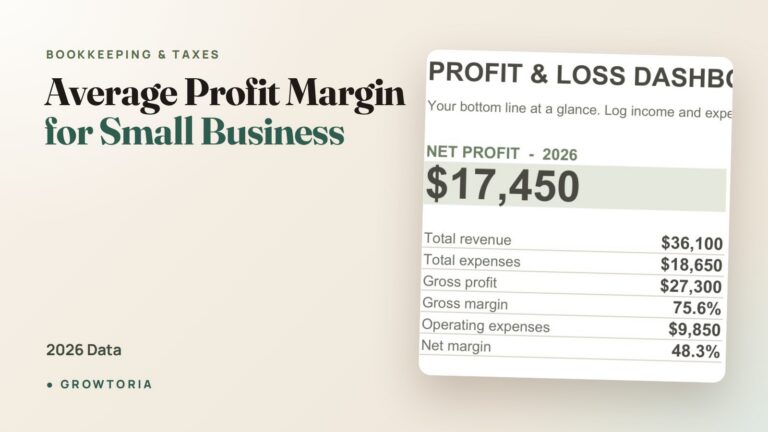
Once you’re comfortable with gross margin, check your real numbers with our free small business profit margin calculator. Reading about margin teaches you less than seeing your own.
Best books for small business taxes and recordkeeping
US owners should start with Small Time Operator by Bernard Kamoroff for the basics, then use J.K. Lasser’s Small Business Taxes by Barbara Weltman as a yearly reference. Tax rules change every year, so always check you have the current edition.
Small Time Operator — Bernard Kamoroff
This classic, updated many times over the years, covers bookkeeping, licenses, sales tax, hiring and self-employment tax for sole proprietors and very small businesses. It’s practical and doesn’t talk down to you.
J.K. Lasser’s Small Business Taxes — Barbara Weltman
A new edition comes out every year. It’s organized by deduction type, so you look things up rather than read it cover to cover. Pair it with our small business tax deductions checklist so nothing gets missed at filing time.
A free source worth reading alongside these: the IRS’s own Publication 583, Starting a Business and Keeping Records. It’s dry, but it’s the official word on what records you have to keep and for how long.
Small business accounting books compared
Use this table to choose based on your problem, not on reviews. Most owners only need two books: one to understand the concepts and one for their biggest pain point.
| Book | Author | Best for | Difficulty | Read time | What you’ll apply first |
|---|---|---|---|---|---|
| Accounting Made Simple | Mike Piper | Total beginners | Easy | 2–3 hours | The accounting equation and the 3 statements |
| The Accounting Game | Mullis & Orloff | People who hate textbooks | Easy | 4–5 hours | Why profit isn’t cash |
| Profit First | Mike Michalowicz | Never having cash left over | Easy | 5–6 hours | Separate accounts + 10th/25th transfers |
| Simple Numbers, Straight Talk, Big Profits! | Greg Crabtree | Owners with staff | Medium | 4–5 hours | Market-rate owner salary, labor efficiency ratio |
| Financial Intelligence for Entrepreneurs | Berman & Knight | Reading P&L and balance sheet | Medium | 6–8 hours | Margins, cash conversion, key ratios |
| Small Time Operator | Bernard Kamoroff | US sole proprietors | Easy–Medium | Reference | Recordkeeping and self-employment tax basics |
| J.K. Lasser’s Small Business Taxes | Barbara Weltman | Annual tax prep | Medium | Reference | Deduction rules for the current year |
How do you actually apply what you read? A 30-day plan
Read one book, then apply it to your own numbers within 30 days. Owners who read three books and change nothing get nothing out of them. Here’s a plan that works with any of the books above.
- Week 1, read with a pen. Pick one book from the table. On a single page, write down the three ideas that apply directly to your business. If you’d like to keep notes, ratings and a yearly goal in one place, the Reading & Book Tracker App works offline and costs nothing per month.
- Week 2, get your records in order. Every book assumes you have clean, categorized transactions. Export three months of bank and card activity and sort it into categories. Our list of bookkeeping categories for small business gives you 15 to start with.
- Week 3, build your first real P&L. Total income, subtract cost of goods sold, then subtract operating expenses. Compare the result with what’s actually in your bank account and write down why they differ, using what the book taught you.
- Week 4, make one change. Open a profit account, raise one price, or set a weekly bookkeeping slot. Just one. Our 30-minutes-a-week DIY bookkeeping routine is an easy way to make it stick.
The shortcut: a ready-made tracker instead of a blank spreadsheet
Weeks 2 and 3 are where most people stop, because building a spreadsheet from scratch is tedious. The Small Business Expense Tracker handles that part for you. It’s one file with six connected sheets for Google Sheets and Excel, with income, expenses and categories already set up, so the concepts from your book have somewhere to go on day one.
If you’d also like invoices, quotes, payroll and VAT in the same place, the Growtoria Business Suite is an all-in-one offline app with no subscription. Prefer to shop on Etsy? You can grab our templates on the Growtoria Etsy shop.
Do you still need an accountant if you read these books?
Yes, for most businesses. Books help you understand your numbers and ask better questions, but they can’t replace a professional for entity choice, payroll compliance, sales tax across states, or an audit.
The real benefit is that you’ll spend less time paying an accountant to explain the basics. You’ll bring them clean records and specific questions, which usually means smaller bills and better advice. If you’re choosing the tools that sit between you and your accountant, see our guide to the best small business bookkeeping system.
Books to skip (or read later)
Not every well-reviewed finance book helps a small business owner. Leave these until your basics are solid:
- CPA exam prep books: thorough, but built for passing a test, not running a shop.
- Corporate finance textbooks: valuation models and capital budgeting rarely matter under $1M in revenue.
- Investing books sold as “business finance”: useful for your personal money, not your books.
- Old tax guides: a 2019 tax book will give you wrong rates and thresholds today.
Frequently asked questions
What is the single best accounting book for a small business owner?
If you only read one, read Accounting Made Simple by Mike Piper. It’s short, accurate, and covers the core concepts every other book builds on. After that, choose a second book based on your biggest problem: cash (Profit First), statements (Financial Intelligence) or taxes (J.K. Lasser).
Can I learn bookkeeping from a book alone?
You can learn the concepts from a book, but the skill only comes from practice. Record a month of your own real transactions in a spreadsheet or app while you read. Without that step, most of the book is forgotten within a few weeks.
Is Profit First a good book for small businesses?
Yes, especially for service businesses and solo owners who never seem to have cash left over. It’s a cash management system, though, not an accounting method. You still need accurate bookkeeping, and some owners find managing five bank accounts too much at first. Starting with two or three is fine.
Are there free alternatives to accounting books?
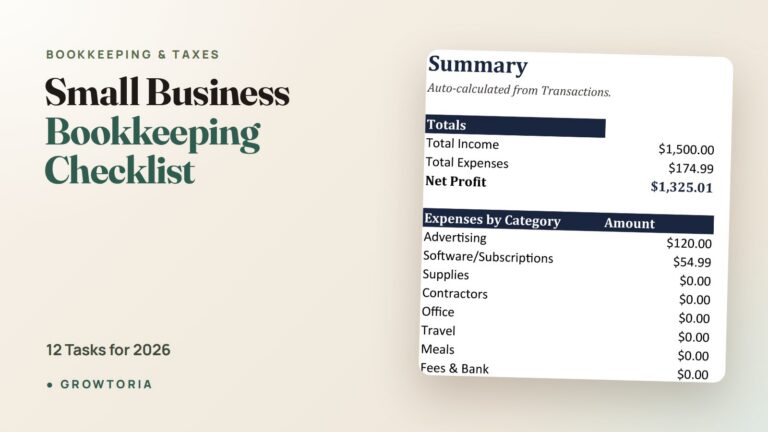
Yes. The IRS publishes free guides on recordkeeping and small business taxes, including Publication 583 and its recordkeeping guidance for small businesses. Many public libraries also stock every book on this list. For a step-by-step routine, our small business bookkeeping checklist lists the 12 tasks to do each month.
The bottom line
The best small business accounting books are short and practical, and you use them on your own numbers. Pick one from the table above, follow the 30-day plan, and set up your records in a tracker the same week. By the end of the month you’ll understand your business better than most owners who’ve read twice as many books.