Cost Estimate Template for Construction: 7 Steps
A cost estimate template for construction is the single fastest way to quote jobs that actually make money — instead of scribbling a round number on the back of a bid sheet and hoping it covers you. Whether you run a remodeling crew, a solo handyman operation, or a small general contracting firm, the estimate is where profit is won or lost. Price it wrong and you eat the difference for weeks.
This guide walks through exactly what belongs in a construction estimate, how to build it in seven steps, and the markup numbers real contractors use. It pairs well with our deeper walkthrough on how to cost a job and the difference between a quote and an estimate.
Quick answer: A cost estimate template for construction breaks a job into line items — materials, labor, equipment, subcontractors, permits — then adds overhead and a profit markup. List quantities and unit costs, total each section, add 10–20% overhead and 8–15% profit, and present it as a clear itemized document the client can approve.
What should a cost estimate template for construction include?
A strong construction estimate includes seven core sections: project details, materials, labor, equipment, subcontractors, overhead, and profit. Anything missing here is money you forget to charge for.
Think of the template as a checklist that stops leaks. The most common reason contractors lose money isn’t a bad price — it’s a forgotten line. Here is what every cost estimate template for construction should capture:
- Project & client details: scope summary, site address, estimate number, and an expiry date (most estimates should expire in 30 days).
- Materials: every item with quantity, unit, and unit price — lumber, fixtures, fasteners, finishes.
- Labor: hours per task multiplied by your loaded hourly rate (wage plus taxes and insurance).
- Equipment & tools: rentals, fuel, and wear on owned gear.
- Subcontractors: electrical, plumbing, HVAC quotes passed through with your markup.
- Overhead: your share of insurance, vehicle, office, and admin costs.
- Profit: a separate, visible line — not buried inside labor.
How do you build a construction estimate step by step?
Build a construction estimate in seven steps: define the scope, take off quantities, price materials, calculate labor, add subs and equipment, apply overhead and profit, then review. Follow the order and nothing slips through.
- Define the scope in writing. List exactly what is and isn’t included. Ambiguous scope is the number-one cause of disputes and unpaid change orders.
- Do the takeoff. Measure and count everything — square footage, linear feet, fixture counts. This is the backbone of any cost estimate template for construction.
- Price materials with real numbers. Pull current supplier prices, not last year’s. Add 5–10% for waste on cut materials like tile and lumber.
- Calculate labor properly. Estimate hours per task, then multiply by your loaded rate. A $25/hour worker often costs you $35–$40 loaded once you add payroll taxes, workers’ comp, and insurance.
- Add subcontractors and equipment. Get firm sub quotes in writing and mark them up 10–15% to cover your coordination and risk.
- Apply overhead and profit. Add overhead (commonly 10–20%) and then profit (commonly 8–15%) on top of your total direct costs.
- Review before you send. Sleep on it. Re-check quantities and confirm no section reads $0 by accident.
If you’d rather skip the setup, our free contractor estimate template PDF gives you the structure in a few clicks.
How much markup should you add to a construction estimate?
Most small construction firms add 10–20% overhead and 8–15% profit, for a combined markup of roughly 20–35% on direct costs. Residential remodelers often run higher; large commercial bids run thinner on volume.
The mistake beginners make is confusing markup with margin. They are not the same number. A 20% margin requires a 25% markup — so if you “add 20%” thinking you’ll keep 20%, you’re already short.
Here’s how the same $10,000 job changes depending on the markup you apply on direct costs:
| Direct costs | Markup applied | Price to client | Your gross profit | Actual margin |
|---|---|---|---|---|
| $10,000 | 15% | $11,500 | $1,500 | 13.0% |
| $10,000 | 25% | $12,500 | $2,500 | 20.0% |
| $10,000 | 35% | $13,500 | $3,500 | 25.9% |
| $10,000 | 50% | $15,000 | $5,000 | 33.3% |
Not sure what to charge to hit a target margin? Run your numbers through our free small business profit margin calculator before you finalize the estimate.
What’s a safe minimum markup?
Below roughly 20% total markup, one bad week — a rain delay, a material price spike, a re-do — can wipe out the entire job’s profit. Treat 20% as a floor, not a target, and price known-risky jobs higher.
Which format is best: PDF, spreadsheet, or an estimate app?
Use a spreadsheet when you want to control the math yourself, a PDF template when you need a clean document to send, and an estimate app when you quote often and want quotes to convert into invoices automatically.
Each format fits a different stage of business. Here’s the honest trade-off:
- Excel / Google Sheets: Fully editable and free-ish, but easy to break a formula and slow to make look professional. Good starting point — see our job-costing guide for the underlying math.
- PDF template: Fast, clean, and client-ready. Perfect when you already know your prices and just need to present them.
- Estimate app: Best for volume. You reuse line items, apply tax automatically, and turn an approved estimate straight into an invoice.
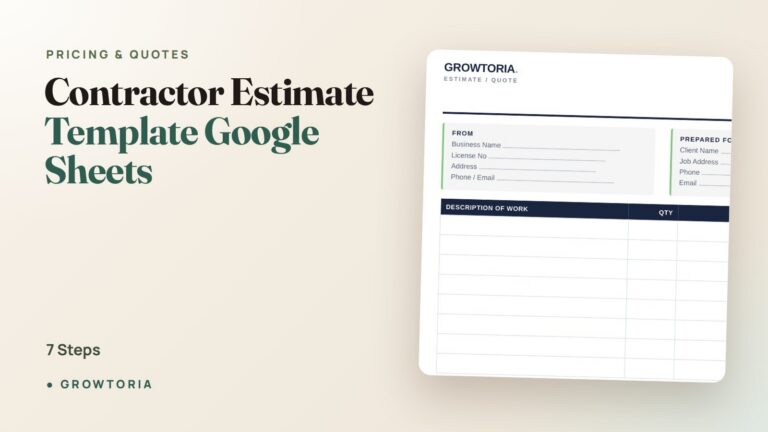
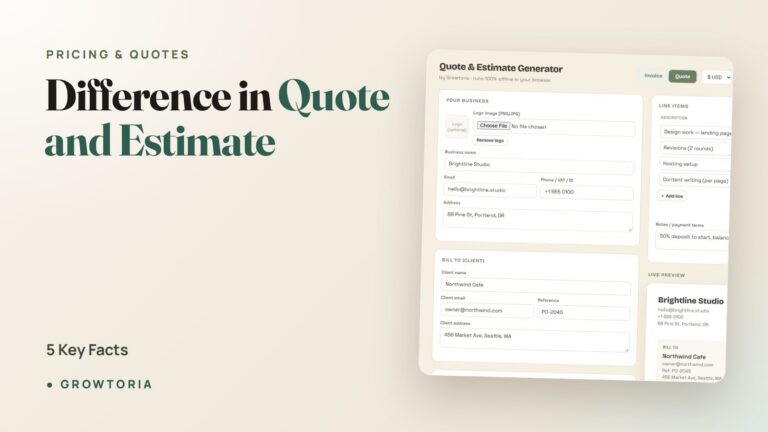
If you bid several jobs a week, the Quote & Estimate Generator App is the done-for-you shortcut — it produces professional quotes, adds tax automatically, and converts any approved quote into a full invoice, all offline with no subscription. For a simpler paper-style form, the Contractor Estimate Template gives you an itemized, instant-PDF quote form. Prefer to buy on a marketplace? You can also grab our templates on our Etsy shop.
How do you present the estimate so clients say yes?
Present a construction estimate as an itemized document with clear scope, a single bottom-line total, payment terms, and an expiry date. Transparency wins trust; a vague lump sum invites haggling and doubt.
A few presentation moves reliably lift your win rate:
- Show line items, then one total. Clients want to see they’re not being padded — and detail makes your number feel earned.
- Offer good-better-best tiers. A choice between three options beats a yes/no on one price nearly every time.
- State exclusions. Spell out what’s not covered so change orders are expected, not resented.
- Add payment terms. Deposit, progress payments, and final balance. If you’re unsure how deposits work, read do you invoice for a deposit.
For more on framing the number itself, our guide on the best way to quote a job covers the psychology of a winning bid.
What do the pros use to estimate?
Professional estimators lean on historical cost data and standardized unit pricing so their numbers hold up. According to the U.S. Bureau of Labor Statistics, cost estimators build bids from detailed material, labor, and location data rather than gut feel — a habit any small contractor can copy.
You don’t need enterprise software to do this. Start a simple log of what past jobs actually cost versus what you estimated. Within a handful of projects, your cost estimate template for construction becomes calibrated to your crew and your region — which is more accurate than any generic database.
Frequently asked questions
What is the difference between an estimate and a quote in construction?
An estimate is your best-informed prediction of cost and can change as the job unfolds; a quote is a fixed price you commit to. Use an estimate for open-ended or uncertain scopes and a quote when the work is clearly defined. Our quote vs estimate breakdown covers the legal nuance.
How detailed should a construction cost estimate be?
Detailed enough that you could rebuild the price from the line items alone. For small jobs, group costs into materials, labor, and other. For larger renovations, break materials down by room or trade so a client can see exactly where the money goes and approve with confidence.
Should I charge for creating a detailed estimate?
For quick standard jobs, offer estimates free. For complex bids that require site visits, engineering, or hours of takeoff, charging a small estimate fee — often credited back if they hire you — filters out tire-kickers and pays for your time.
What’s the best free cost estimate template for construction?
The best free option is one that already includes labeled sections for materials, labor, overhead, and profit so you don’t forget a line. Start with our free contractor estimate template, then upgrade to an app once you’re quoting weekly.
Start pricing for profit today
A cost estimate template for construction turns quoting from a nerve-racking guess into a repeatable system that protects your margin on every job. Nail the seven sections, apply real markup, and present it cleanly — that alone puts you ahead of most competitors who still eyeball their prices.
Ready to make it effortless? Browse our free small-business tools to run your numbers, or reach for the Contractor Estimate Template and start sending professional, profitable estimates this week.