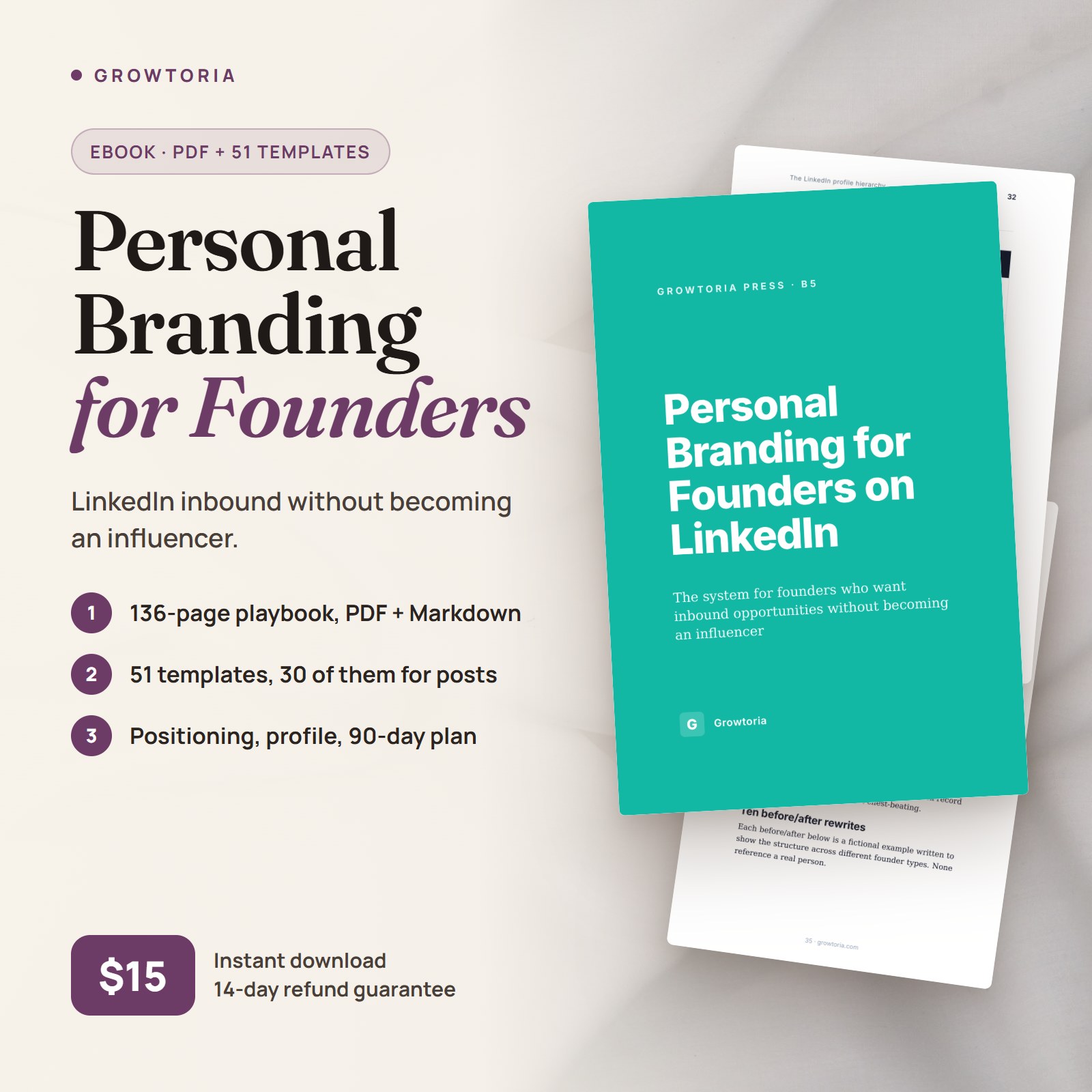
Personal Branding for Founders on LinkedIn
$15.00
Description
Who this is for
- Solo and small-team founders of B2B services firms (consultancies, agencies, productized services) whose pipeline depends on referrals, word of mouth or outbound.
- Technical founders who have a product but no audience, and want to reach the right buyers through positioning rather than paid acquisition.
- Senior consultants and agency operators who already post on LinkedIn now and then, but whose content has not produced real business.
- Busy founders who want LinkedIn to be a modest weekly investment, not a second career as a content creator.
The problem
Most founder content on LinkedIn falls into one of two traps: vanity posts (motivational quotes, milestone confetti, manufactured vulnerability) or thinly veiled pitches. Neither builds anything. A feed that drifts from topic to topic gives readers nothing to remember you by and no reason to come back.
The root cause is rarely the writing. It is posting before deciding who you are talking to, about what, and from what angle. Without that, no hook formula and no posting frequency will compound into inbound conversations.
This ebook is a positioning-first system: settle your positioning, rebuild your profile around it, post on five content pillars at a cadence you can hold, and let your comments do part of the work.
What you’ll get
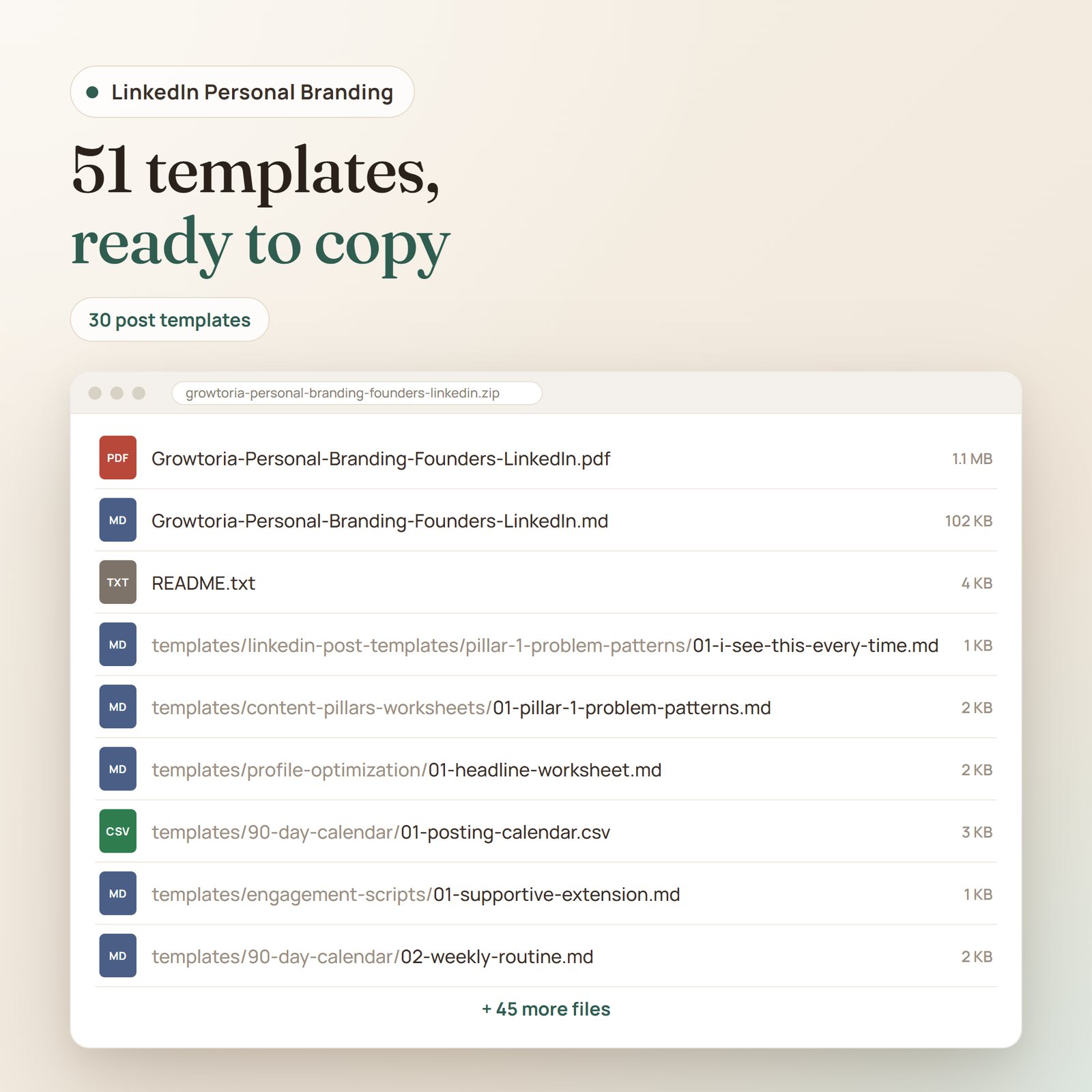
- The ebook as a 136-page PDF: five parts, 18 chapters, an introduction, a 30-day launch plan and a resources section.
- A Markdown edition of the full book, easy to search, copy from or keep in your notes.
- 30 LinkedIn post templates: six per content pillar, as separate files in templates/linkedin-post-templates/.
- 10 engagement scripts: comment templates for the five-a-day habit, in templates/engagement-scripts/.
- 5 content-pillar worksheets: one per pillar, to build your inventory of post ideas.
- 4 profile-optimization worksheets: headline worksheet, About section template, Featured section checklist and Experience rewrite guide.
- A 90-day calendar: a pillar-assigned posting calendar (CSV) and a weekly routine guide.
- README.txt: a guide to every file in the download.
Inside the ebook
- Introduction: the positioning-first mental model, who the book is for, and what to have live by the end of the month.
- Part I — The positioning layer: why most founder LinkedIn content fails, the narrow niche + opinion layer, your 3-sentence positioning statement, and a 5-question positioning audit.
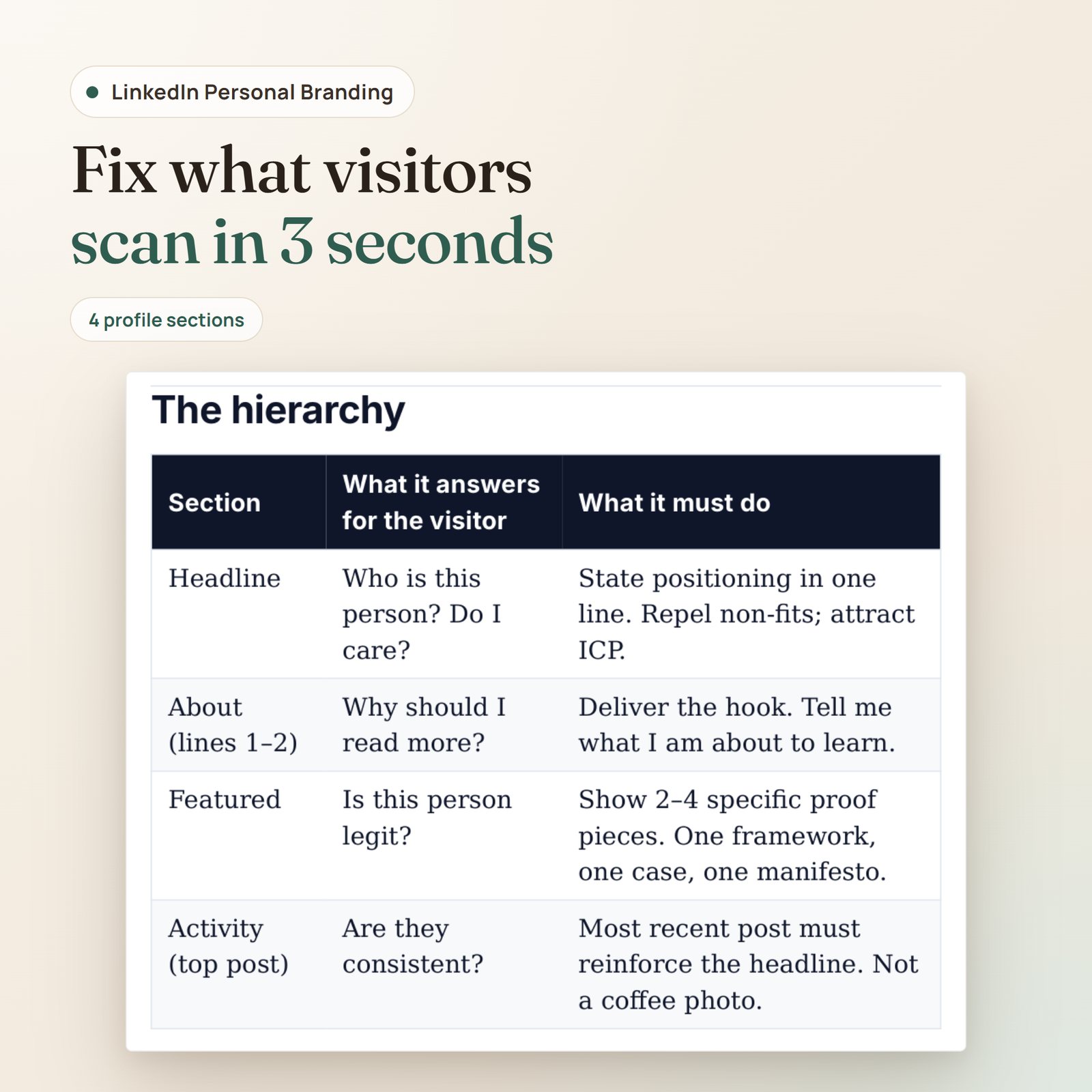
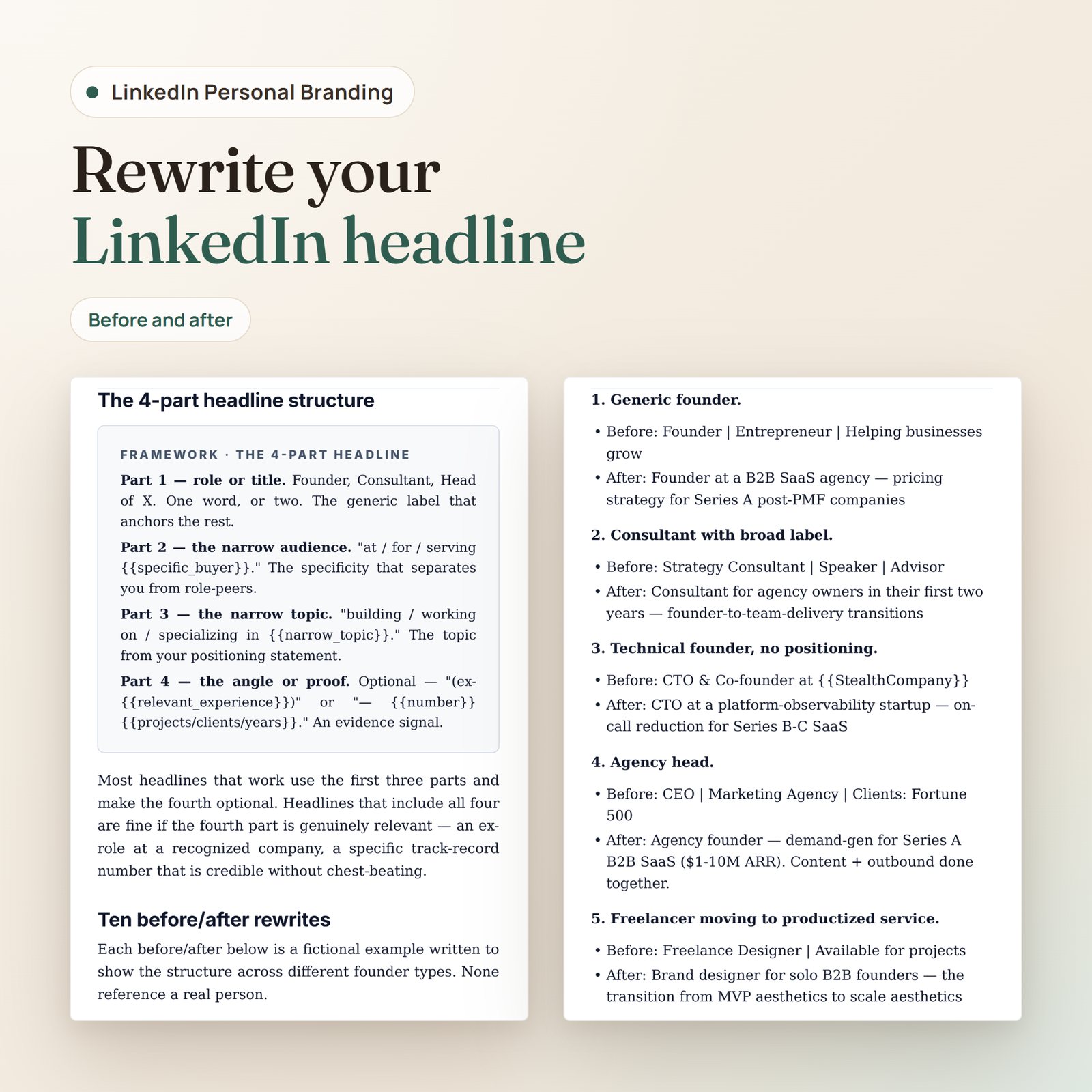
- Part II — Profile as asset: the LinkedIn profile hierarchy, rewriting your headline, the About section that earns the scroll, and Featured section and experience polish.
- Part III — The 5 content pillars: why five pillars, then one chapter each on problem patterns, counterintuitive takes, client and customer stories, process and framework shares, and opinion on industry news.
- Part IV — The 30 post templates: six ready-to-adapt templates per pillar, each with its structure and placeholders.
- Part V — The 90-day implementation: the posting cadence that compounds, the 90-day calendar, engagement that matters, and when to pivot your positioning.
- Conclusion — The 30-day launch plan: a week-by-week rollout of the system, and what to cut if the month is tight.
- Resources: further reading, tool categories and the template index.
What you’ll be able to do
- Write a positioning statement you can defend: three sentences covering who you serve, your narrow topic and your angle, checked against a 5-question audit.
- Pick a narrow topic and a sharp angle using the topic × angle grid, instead of writing about “entrepreneurship” or “marketing.”
- Rebuild your profile around your positioning: headline, About, Featured and Experience, in one focused session.
- Run five content pillars with hook templates and a weekly mix, so readers learn what to expect from you.
- Write client stories that stay honest and confidential: clearly labeled composites or permissioned cases, with the caveat included.
- Hold a cadence of three to four posts a week, planned in advance with the 90-day calendar and a short weekly routine.
- Use comments as a positioning channel with ten comment templates and a five-a-day habit.
- Decide at day 90 whether to pivot or stay the course, using clear signals for each.
FAQ
I only have a few hundred followers. Is that too small to start?
No. The book measures progress in qualified inbound conversations, not follower count, and it starts with positioning (Part I), which does not depend on audience size.
How much time does this take each week?
The routine in Part V (Chapter 15) is built around three to four posts a week plus five comments a day, planned to fit in roughly two hours a week.
Do I need a ghostwriter or AI to write the posts?
No. The book is written for founders who write their own posts in their own voice. The Resources section suggests AI tools for polishing drafts and brainstorming hooks, not for writing whole posts.
Are the examples real case studies?
No. The founders, profiles, posts and numbers in the examples are hypothetical. They show how the frameworks work; they are not results from real engagements.
Can I post the templates as they are?
They are meant to be adapted. Each one uses placeholders, and Part IV explains how to replace them and tune the voice to yours before posting.
What if I run a B2C brand?
The book is written for B2B founders, consultants and agency operators. The positioning work in Part I translates, but the examples and pillar advice assume a B2B buyer.
What if I’m not satisfied?
See our guarantee below.
Our guarantee
If this guide doesn’t help you, email [email protected] with your order number within 14 days of your purchase and we refund you in full. No forms, no reason needed, and you keep the file. Full details in our Refund Policy.


