SEO in the AI Search Era
$19.00
Description
Who this is for
- In-house SEO managers at B2B or e-commerce companies who see click-through softening while rankings hold, and want to understand what changed underneath.
- Content strategists and freelance SEO consultants who need a clear way to explain to clients why “rank and hope” now needs a second pillar.
- Founders with a technical bent who run their own site and would rather work from a checklist and templates than hire an agency.
- Operators who already know the basics. This is not SEO 101: it assumes you know keywords, internal links, schema and Core Web Vitals.
The problem
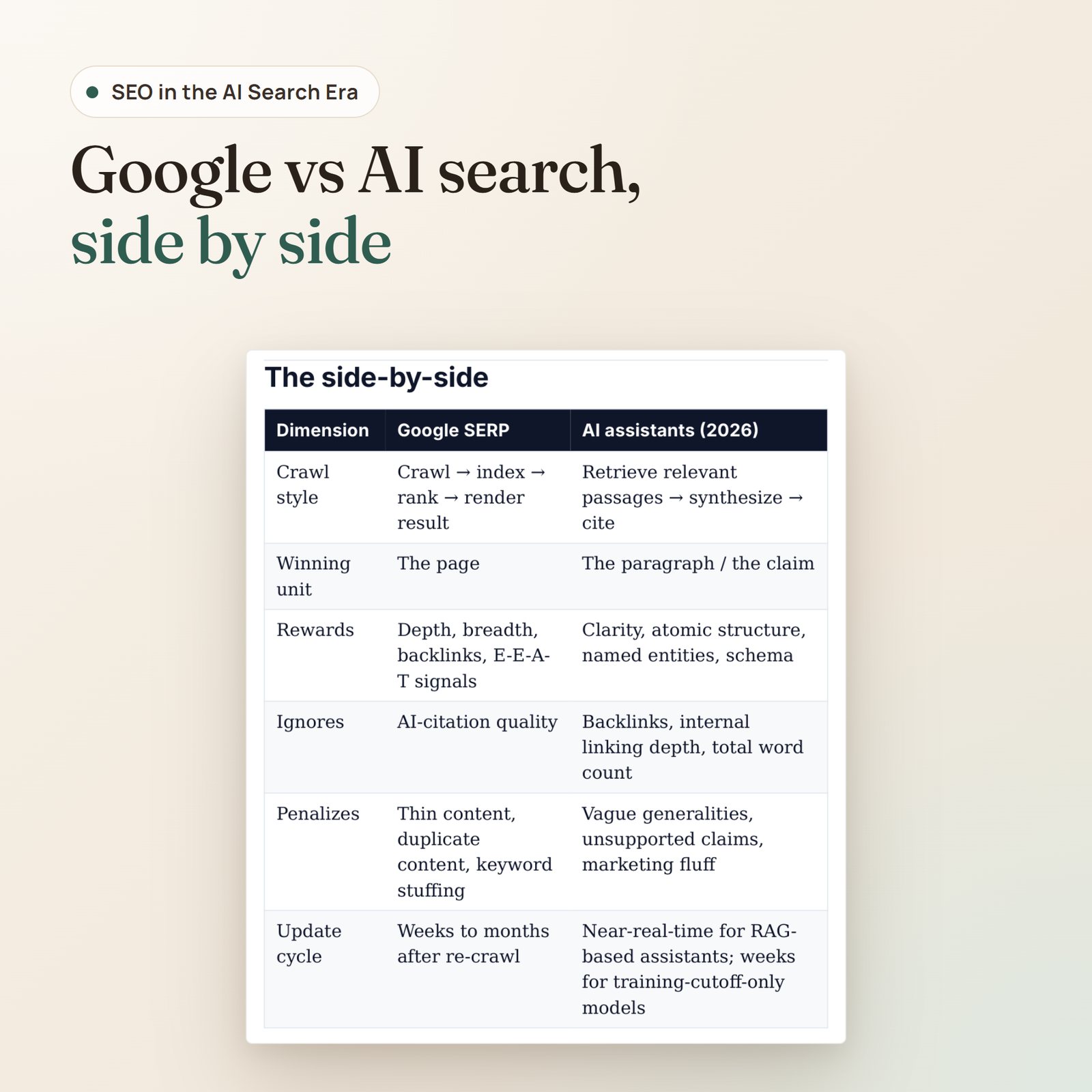
Search now runs on two layers. Layer 1 is the Google results page you already know how to optimize. Layer 2 is the answer layer of AI assistants such as ChatGPT, Claude, Gemini and Perplexity, which lift short, self-contained statements from pages and cite the sources they use.
The two layers reward different things. A long, comprehensive article can rank well on Google and still be passed over by an assistant because its key claims are buried in transitional prose, its entities are vague, or its structured data is missing. Some habits that help on Google, like long intros and dense internal linking, can make a page harder for an assistant to quote.
Most SEO programs still optimize for layer 1 only. This ebook is a practical guide to SEO for AI search that works on both layers at once: what to change on the page, in your technical setup, in your content plan and in how you measure.
What you’ll get
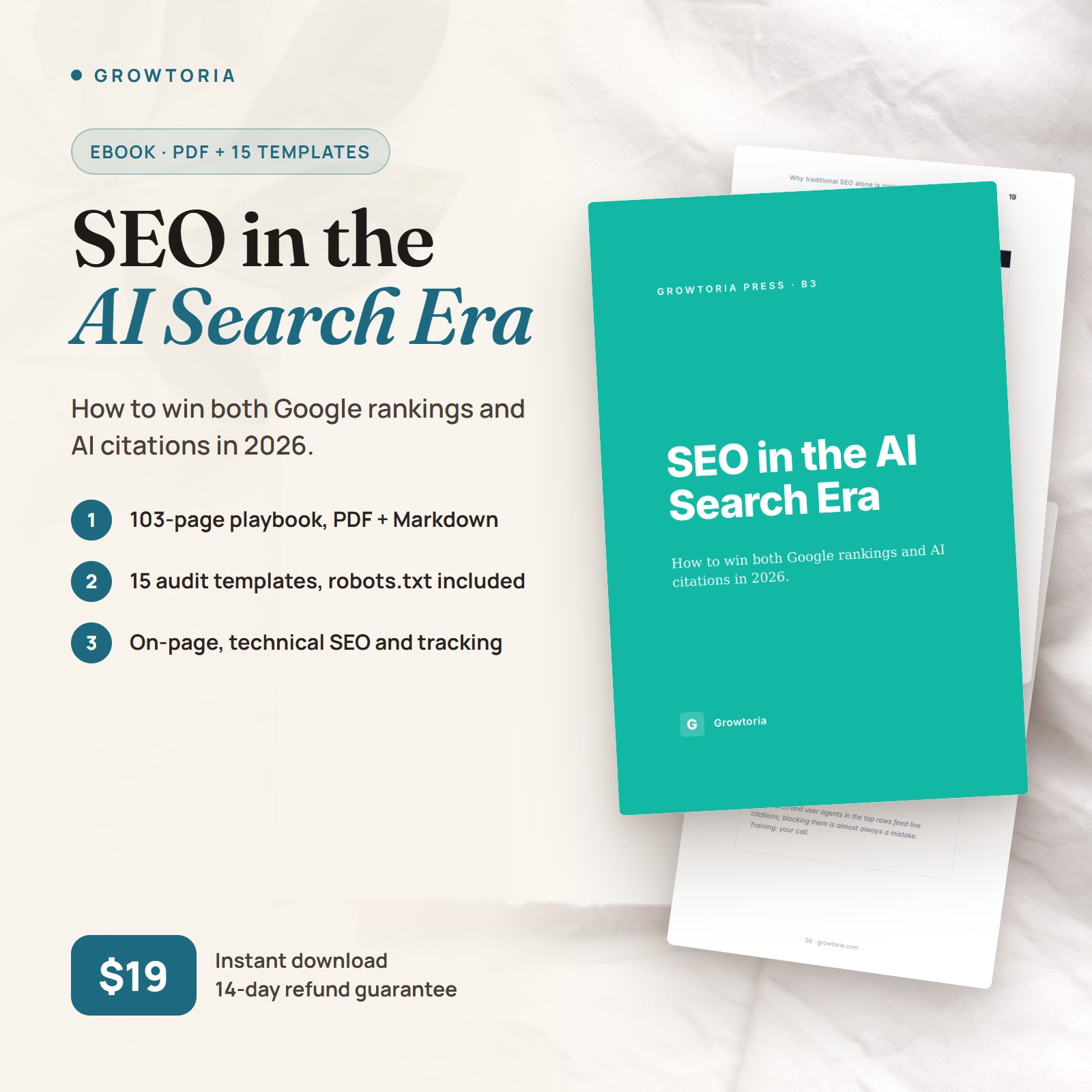
- The ebook in PDF (103 pages, 6×9): an introduction, 17 chapters in five parts, a 7-day action plan and a resources section.
- A Markdown edition of the full book, easy to search and copy from.
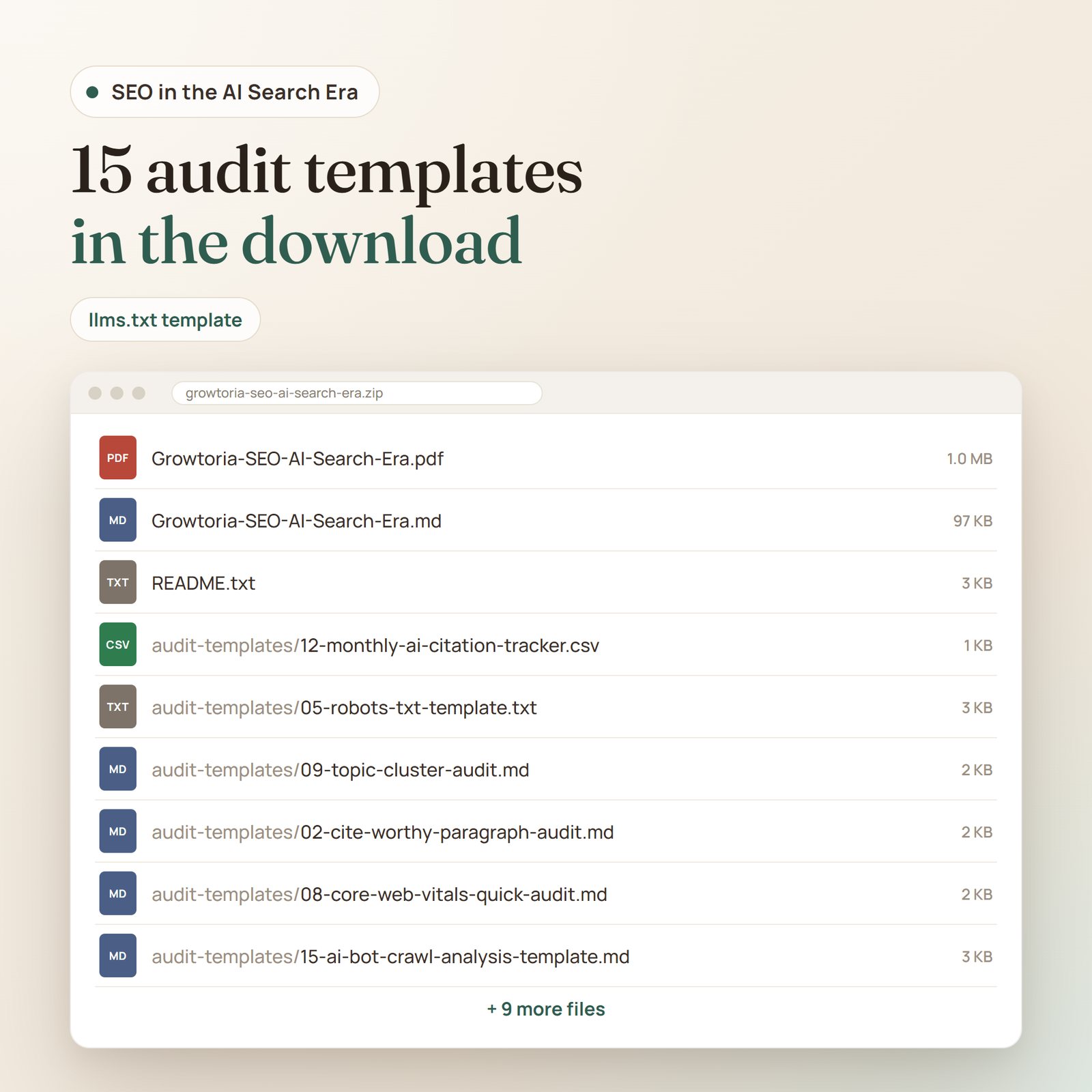
- 15 audit templates in the audit-templates/ folder: 10 Markdown worksheets and checklists (dual-layer audit, cite-worthy paragraph audit, schema compliance, entity density, content refresh priority, Core Web Vitals, topic cluster, original data, article structure decision tree, AI-bot crawl log analysis), a robots.txt template, an llms.txt template, a CSV AI-citation tracker, and two JSON-LD templates (FAQPage and Article).
- README.txt with an index of the 15 templates.
Inside the ebook
- Introduction: the two-layer model of search, who the book is for, and what you can ship in a weekend.
- Part I · The New Landscape: the shift from SERPs to AI citations, why traditional SEO alone is losing ground, and the 2-layer mental model with a two-pass page audit.
- Part II · On-page for AI Citations: the five-element cite-worthy paragraph format, the structured data AI assistants use (FAQPage, Article and Organization JSON-LD), entity optimization beyond keywords, and the Q&A-first headline hierarchy.
- Part III · Technical SEO 2026: crawlability for AI bots (robots.txt and llms.txt), Core Web Vitals in the AI era with an 8-item quarterly audit, and sitemap and content freshness signals.
- Part IV · Content Strategy for Dual Layer: citation clusters vs traditional topic clusters, original data as a citation magnet, semantic structure that passes both layers (with a 10-point checklist), and a library of 10 article formats.
- Part V · Measurement & Auditing: how to track AI citations (tool categories plus a DIY Python tracker sketch), the monthly dual-layer audit, and when to double down on a struggling page vs retire it.
- Conclusion and Resources: a 7-day action plan, plus recommended books, tools and communities.
What you’ll be able to do
- Score any page on both layers with the 10-point dual-layer checklist and know which fix comes first.
- Rewrite weak paragraphs into the five-element cite-worthy format: claim, specific, evidence, implication, bridge.
- Ship FAQPage, Article and Organization schema from ready-to-fill JSON-LD templates and validate it with Google’s Rich Results Test.
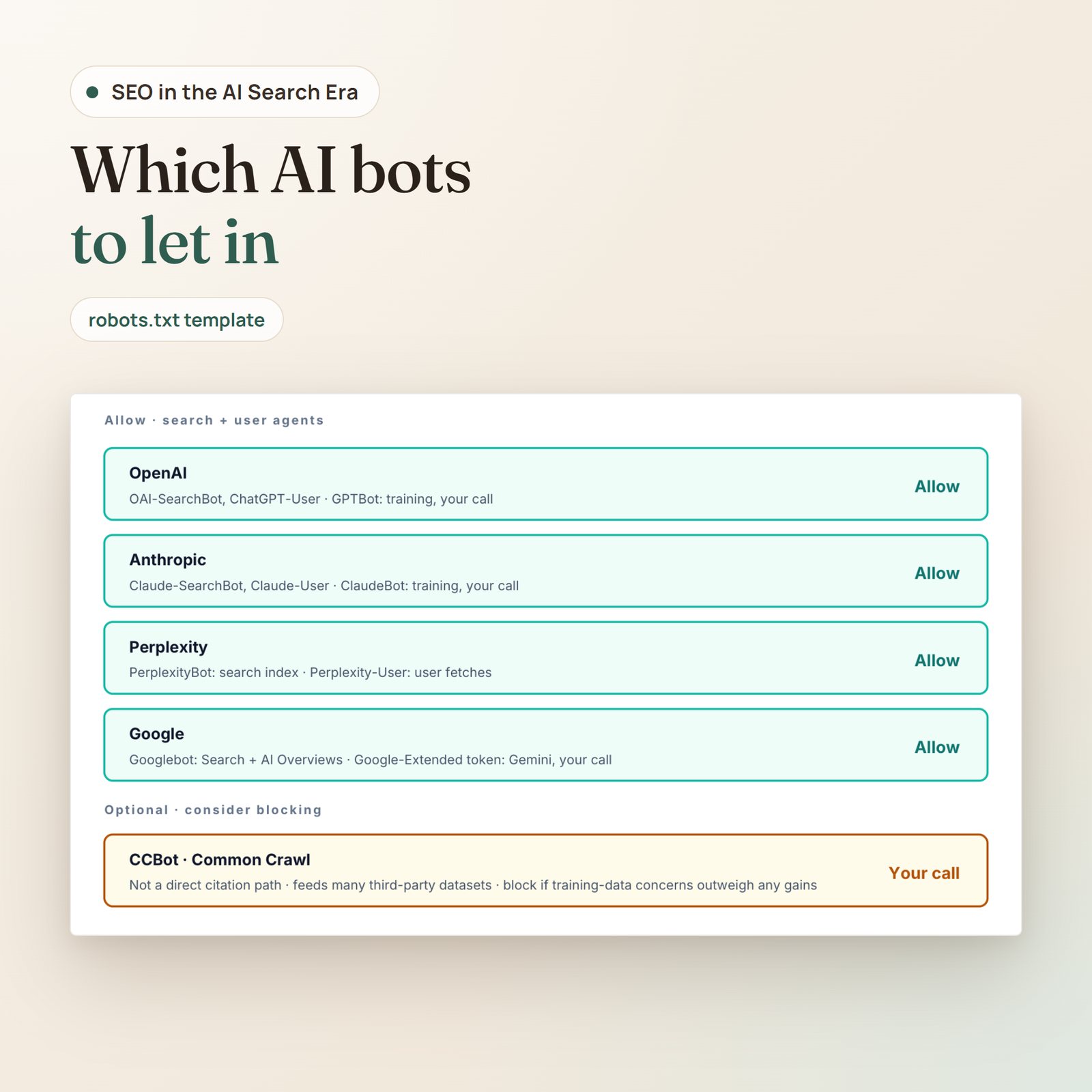
- Audit robots.txt and server logs for AI search, user and training agents, and decide on each; optionally publish an llms.txt file.
- Map the entities on a page (primary, supporting and contrast) and fill the gaps.
- Plan content for both layers: choose between a traditional cluster and a citation cluster, scope a first original-data asset, and match each article to the right format.
- Track AI citations with a simple DIY tracker and a CSV log, and run a 2-hour monthly audit.
- Decide when to double down on a struggling page and when to retire it cleanly.
FAQ
Is SEO dead?
No. This book treats Google rankings as one of two layers of search, not as a thing of the past. Part I explains the two-layer model, and the rest of the book shows how to work on both layers at once.
Will this become outdated?
Specific tactics will change: crawler names, schema priorities and tools all move, and the book says so. The framework (two layers, atomic paragraphs, named entities, original data, a monthly cadence) is designed to outlast them. Your purchase includes lifetime updates to this book.
Do I need technical SEO skills?
Basic familiarity helps: the book assumes you know SEO fundamentals and suggests a foundational guide first if you are brand-new. Part III and chapter 5 use robots.txt, llms.txt and JSON-LD templates with placeholders. The DIY tracker in chapter 15 is a Python sketch, so you need to be comfortable running a script to use it.
Is this better than taking an SEO course?
Different thing. Courses teach the fundamentals. This ebook assumes you know them and focuses on the AI-search overlay: on-page (Part II), technical (Part III), content strategy (Part IV) and measurement (Part V).
Are the examples real case studies?
No. The worked examples are hypothetical and labeled as such. They show how the frameworks apply; they are not results from real engagements.
What if I’m not satisfied?
See our guarantee below.
Our guarantee
If this guide doesn’t help you, email [email protected] with your order number within 14 days of your purchase and we refund you in full. No forms, no reason needed, and you keep the file. Full details in our Refund Policy.


